1Overview
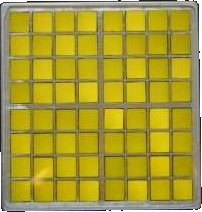
GAGG:Ce (Gd3Al2Ga3O12:Ce) is a single-crystal garnet scintillator that combines one of the highest densities available in a non-hygroscopic oxide material with a fast primary decay time below 90 ns. At 6.6 g/cm³ and an effective atomic number driven by gadolinium, GAGG:Ce offers excellent stopping power for MeV-range gamma rays. Its green emission peak at 520 nm aligns well with the peak quantum efficiency of silicon photomultipliers (SiPMs), making it the crystal of choice for SiPM-based readout without wavelength-shifting elements.
Unlike hygroscopic materials such as NaI(Tl) or LaBr3(Ce), GAGG:Ce requires no hermetic sealing. Crystals can be handled in ambient laboratory air and incorporated into detector assemblies with fewer packaging constraints. This robustness, combined with its radiation hardness and lack of self-activity, simplifies integration into field-deployed instruments and compact detector modules.
Choose GAGG:Ce when the application demands high photon detection efficiency, fast coincidence timing, and a non-hygroscopic crystal compatible with compact SiPM-based readout. It is the dominant scintillator in commercial TOF-PET scanners and is widely used in small-animal preclinical imaging and in HEP calorimeter prototype work where moderate energy resolution is acceptable.
2Specifications
| Parameter | Value | Notes |
|---|---|---|
| Crystal / Formula | Gd3Al2Ga3O12:Ce (GAGG:Ce) | Ce3+ activator, garnet structure |
| Density | 6.6 g/cm³ | |
| Light Output | Approx. 50,000 photons/MeV | |
| Emission Maximum | 520 nm | Green; well-matched to SiPM peak QE |
| Refractive Index | 1.85 at 520 nm | |
| Primary Decay Time | <90 ns | Single dominant component |
| Energy Resolution | Approx. 6.0% | Measured with high-QE PMTs (test energy not stated in source; verify) |
| Hygroscopic | No | Handles in ambient air; no hermetic seal required |
| Cleavage / Fragility | verify | |
| Maximum Dimensions | verify | Contact BNC for available crystal sizes |
| Operating Temperature | verify | |
| Radiation Hardness | verify | Reported rad-hard vs. organic scintillators |
Note: Specifications are taken verbatim from the source datasheet. Parameters marked "verify" are not confirmed in the source document and require factory confirmation before use in system design.
3Energy Resolution and Performance
The energy resolution of approximately 6.0% (measured with high quantum efficiency PMTs) places GAGG:Ce in the middle tier of inorganic scintillators: better than BGO and competitive with CsI(Tl), but below the top-tier spectroscopy materials such as LaBr3(Ce) or SrI2(Eu). For PET applications, where coincidence timing resolution and stopping power matter more than absolute spectral resolution, GAGG:Ce is an excellent fit. The source datasheet does not state the gamma energy at which this resolution is measured; treat the comparison figures as material-class context rather than spec, and confirm test conditions with the factory.
The sub-90 ns primary decay time enables good coincidence timing performance in time-of-flight PET (TOF-PET) configurations. GAGG:Ce does not carry the intrinsic radioactivity background of lanthanum-bearing crystals (no La-138 self-activity), which is an advantage in low-count-rate environments and in calibration measurements.
| Performance Parameter | Value | Condition / Notes |
|---|---|---|
| Energy Resolution | ~6.0% | High-QE PMT readout (test energy not stated in source; verify) |
| Light Output | ~50,000 ph/MeV | |
| Primary Decay Time | <90 ns | Enables TOF coincidence windowing |
| Relative Light Yield vs. NaI(Tl) | verify | Not stated in source datasheet; confirm with factory |
| Intrinsic Background | No known self-activity | GAGG:Ce carries no La-138 self-activity (material property; not stated in source) |
| Afterglow / Phosphorescence | verify |
Relative light yield versus NaI(Tl) is not stated in the source datasheet and should be confirmed with the factory. In SiPM readout applications, GAGG:Ce's 520 nm emission matches SiPM peak sensitivity closely, which helps recover photoelectron yield compared with bialkali PMT readout. System-level performance should be evaluated with the intended photodetector.
4Typical Applications
- PET imaging (clinical and preclinical): High density and fast decay make GAGG:Ce the primary alternative to LYSO in time-of-flight PET scanner development. Non-hygroscopic construction simplifies detector module assembly.
- High-energy physics (HEP) calorimetry: Stopping power and radiation hardness support use in electromagnetic and hadron calorimeter prototype arrays.
- SiPM-based compact detectors: Emission at 520 nm matches SiPM peak quantum efficiency, enabling low-bias, high-performance readout without wavelength-shifting. Suitable for portable and handheld radiation instruments.
- Nuclear medicine and SPECT: Gamma-camera and coincidence detector modules for single-photon emission imaging.
- Industrial gauging and process control: Rugged, non-hygroscopic construction tolerates harsh environments. High stopping power reduces crystal volume for a given detection efficiency.
- Security and portal monitoring: Fast decay and moderate energy resolution support gamma identification in cargo and personnel screening systems.
- Physics research: Prompt gamma-ray detection, neutron-capture gamma spectroscopy, and time-coincidence experiments where sub-100 ns timing is required alongside reasonable spectral resolution.
5Available Configurations
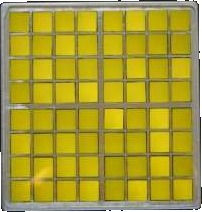
Berkeley Nucleonics ScintIQ crystals are supplied as bare polished crystals, diffuse-wrapped crystals, or integrated detector assemblies depending on the application. Standard and custom shapes, dimensions, and surface finishes are available. Contact BNC with your geometry and readout requirements for a configuration recommendation.
| Configuration Option | Details |
|---|---|
| Crystal form | Cylindrical, rectangular, custom geometry (verify available sizes) |
| Surface finish | Polished, diffuse-wrapped (e.g., ESR/Teflon), or specular coating (verify) |
| Readout: PMT | Coupled to bialkali or high-QE PMT; standard optical coupling grease or BC-630 equivalent |
| Readout: SiPM | Direct coupling; 520 nm emission is well-matched to SiPM peak QE; no WLS required |
| Housing / shielding | Al or mu-metal housing options (verify); hermetic encapsulation not required |
| Array assemblies | Multi-crystal pixelated arrays for PET and imaging applications (verify) |
| Electronics integration | Compatible with BNC ScintIQ bMCA, bPAD, and TOPAZ readout electronics |
Specific dimensions, surface treatments, and housing designs for GAGG:Ce are confirmed at order time. Items marked "verify" require factory confirmation. Contact BNC Engineering for custom sizing and array configurations.
6Request a Quote
Talk to a BNC Scintillation Engineer
GAGG:Ce crystals and integrated detector assemblies are available in standard and custom configurations. Our applications engineers can help specify crystal dimensions, surface finish, readout electronics, and housing for your system.
Email: info@berkeleynucleonics.com
Phone: 800-234-7858